
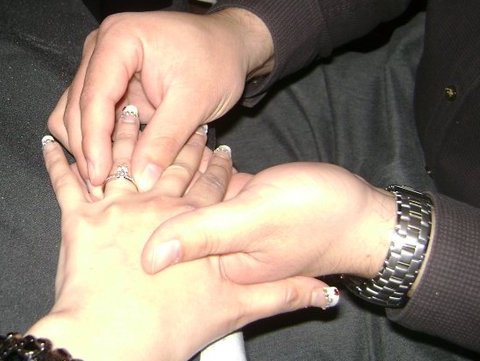
What Are the Benefits of Premarital Counseling
In providing couples counseling over the years, I’ve come to quickly notice a very interesting link between the amount of time a couple has been married and how difficult their struggles tend to be. This made me realize that going through a course of pre-marital counseling before or very early on in the relationship cannot only make it easier to sort out such conflicts, but can help save years of unnecessary emotional hardship from waiting far too long to resolve issues. I’ve noticed that when couples have been together for a very long time, their habits, their pet peeves, are much more ingrained and are more challenging to undo than at the beginning of their relationship when habits haven’t fully formed (Hataway, 2020).
How Childhood Trauma Affects Relationships and Communication
Conflicts within a relationship is a normal part of life and part of what comes from being in a relationship. Most of what we learn about relationships comes from our earlier experiences growing up, watching and experiencing how our parents got along. This is what’s commonly referred to as “baggage” that we then bring to our adult relationships. This is normal and expected because, well, no one’s perfect, not you, not your parents. This, in addition to the fact that life doesn’t come with a manual on the “how tos” of life, can make you feel lost at knowing what to do when you don’t get along with your significant other and the hurt begins to set in. Thankfully, you do have an alternative to a manual, a much better alternative: The Holy Bible. In Galatians 5:22 (NKJV), the Apostle Paul explains to us what love is: “But the fruit of the Spirit is love, joy, peace, forbearance, kindness, goodness, faithfulness, gentleness and self-control” (NKJV). So, if you notice any of these missing in your relationship, it’s time to consider looking into couple’s therapy.
Early childhood trauma can impact trust, communication, and emotional safety in relationships. Learn how these patterns form—and how they can heal
Our very own experiences in childhood can as well influence what “baggage” you could bring to an adult relationship. Any experiences with trauma such as emotional/verbal abuse, emotional neglect, physical abuse, or sexual abuse can shape how you respond to emotional danger in your personal relationships and moreso, in your romantic relationship. Consequently, we end up developing ways to protect ourselves. This is also normal and expected because your body will learn very fast how to protect itself from danger. When you get triggered by your partner, your body can mistake a familiar cue from your past, or bodily sensation, with a perceived present-day threat.
Take for example, getting yelled at by one of your parents while you were growing up, your body may have learned to react by reacting in one of three ways; either fighting back (e.g., yelling back), fleeing (e.g., running away from the situation to your room), or by freezing (e.g., staying still so as not to provoke your parent any further and hoping their anger quickly dissolves). Fast forward to adult life, and the raising of your partner’s voice will take your body (via your Central Nervous System), not your mind, back to when you were younger and you will likely respond the same way. You and your partner may wonder why you may get “defensive” so easily, or, “why you’re so sensitive.” Even a benign cue such as your partner raising their voice in excitement could be upsetting. What needs to happen to lessen these reactions is to find emotional safety. To teach our hearts and bodies that your partner is/are not your parent(s). And just as your wounds formed within a relationship from childhood, so can the healing take place within your present-day relationship. For this to happen, obtaining emotional safety from your partner and each other is a necessity for healing.
What Makes a Healthy Marriage? Key Traits Every Couple Needs
Perhaps one of the most important factors that must be in place prior to marriage is the attachment concept of emotional safety. What this means is trusting in your partner to be responsive to your emotional needs. In the example just noted, this can look like your partner understanding that you had become upset at the situation that triggered a perceived sense of danger and not what they themselves did per se. In showing you they understood they can acknowledge and apologize for such a misunderstanding, “I see how upset I made you feel. It was not my intention. Can you forgive me?” This is an example of a partner with a secured attachment style. If you see yourself and your partner already doing so then great! But, if you could never imagine this taking place as it seems so foreign, then yes, pre-marital counseling could be highly beneficial.
What Does a Healthy Marriage Look Like?
Another example in which you need your partner to be there for you is when you have other life stressors outside your romantic relationship. Take for example the following scenario: You had a hard day at work, you had a meeting with your boss that didn’t go as well so you come home later that day hoping your partner is there to lend a listening ear. How does this go? What you would need from your partner in such a situation is for them to be emotionally available. Someone who is emotionally available is someone who is emotionally responsive, “That must be hard. It hurts me to see you hurt from what happened to you today. Tell me more.” Again, if your partner does this already then you’re on the right track but if not, consider pre-marital counseling.
What Science and Scripture Say About Love, Attachment, and Emotional Safety
What science calls healthy attachment as the form of love, scripture defines love as “patient and kind. Not envying, not boasting, not proud” (1 Corinthians 13: 4-7, NKJV). To assure you have a loving relationship like the one that the Apostle Paul describes in his letter to the Corinthians, emotional safety is necessary. So ask yourself, how does my partner love me (Dr. Sue Johnson, 2024)?
Don’t Wait – Have a Pre-marital Consult if Unsure
Issues don’t resolve when moving in and getting married. On the contrary, they tend to worsen once this happens. This is because the close proximity and increase in ongoing presence which other, magnifies any issues that may have been latent prior to moving in because with greater distance apart, were never really felt or noticed.
As a professional in the field as well as with lived experience, my strong recommendation is to get a “pre-marital review” to check for how you get along so as to assure you have emotional safety in place and if not, to learn to obtain it with each other. If you’re already having some issues getting along, or with communication then definitely see a professional prior to, or as early in your marriage as possible. Even when our attachment styles may not be as healthy, with proper guidance, they can be improved. What should be one of your happiest moments in your life does not have to come with stress and above all, doesn’t need to wait years before addressing. Science has shown that couples therapy does help in many cases (Spengler et al., 2022).. Book your session now.
References:
Hataway, L. (2020, October 20). Marital conflict causes loneliness, health problems.
University of Georgia. https://news.uga.edu/marital-conflict-causes-loneliness-health-problems/
Johnson, S. (2024, December 12). Are you there for me [Video].
YouTube. https://www.youtube.com/watch?v=zg5EkMp3ZFoSpengler, P. M., Lee, N. A., Wiebe, S. A., & Wittenborn, A. K. (2022). A comprehensive meta-analysis on the efficacy of emotionally focused couple therapy. Couple and Family Psychology: Research and Practice, 13(2), 81–99. https://doi.org/10.1037/cfp0000233
Disclaimer: This information is intended to be for general informational purposes and is not intended to diagnose or treat any condition. Human error in this writing is also a possibility. For a more accurate assessment of your specific situation, please seek the advice or help from a qualified mental health professional directly.
The author has checked with and used sources believed to be reliable in his efforts to provide information that is complete and generally in accord with ethical standards of practice. However, in view of the possibility of human error or changes in behavioral, mental health, or medical sciences, neither the author, nor anyone who contributed to this author’s knowledgebase of this work warrants that the information contained herein is in every respect accurate or complete, and they are not responsible for any errors or omissions or the results obtained from the use of such information. Readers are encouraged to confirm the information contained in this article with other sources.